29 articles
-
Building Applications With LLMs

A field guide to building applications with LLMs: the capability ladder from prompting to agents, architecting around non-determinism, and shipping.
AI · 2026-10-23 · 16 min read
-
AI Model Evaluation Metrics

Which metrics fit classification vs generation, why BLEU and perplexity mislead, and how LLM-as-judge really performs—biases included.
AI · 2026-10-23 · 10 min read
-
Choosing an LLM for Your Use Case

Choosing an LLM for your use case: define your real requirements, weigh proprietary vs open, test on your own data, and avoid picking by leaderboard.
AI · 2026-10-10 · 9 min read
-
Small vs Large Language Models

Small vs large language models: the real tradeoffs in capability, cost, latency, and privacy—when a small model wins and how to decide.
AI · 2026-09-19 · 9 min read
-
AI Inference Cost Optimization

AI inference cost optimization: the biggest levers—right-sizing the model, cutting tokens, caching, batching, and API vs self-host by volume.
AI · 2026-09-02 · 9 min read
-
Self-Hosting AI Models

Self-hosting AI models: why and when to run open models on your own infrastructure, the serving stack, the real costs, and the mistakes to avoid.
AI · 2026-09-02 · 10 min read
-
Running LLMs Locally

Running LLMs locally: why do it, the tools (Ollama, LM Studio), the hardware and memory that decide what you can run, quantization, and cloud tradeoffs.
AI · 2026-08-20 · 9 min read
-
Deploying LLMs in Production

Deploying LLMs in production: managed API vs self-host, right-sizing your model, inference with vLLM, scaling, cost control, and safety.
AI · 2026-08-20 · 12 min read
-
Chain of Thought Prompting Guide

Chain of thought prompting guide: what it is, why it works, zero-shot vs few-shot CoT, self-consistency, when to use it, and the honest caveats.
AI · 2026-08-11 · 9 min read
-
Prompt Engineering Techniques

Prompt engineering techniques that work: being specific, giving context, few-shot examples, structured output, decomposition, and the mistakes to avoid.
AI · 2026-08-11 · 8 min read
-
Evaluating AI Agent Reliability
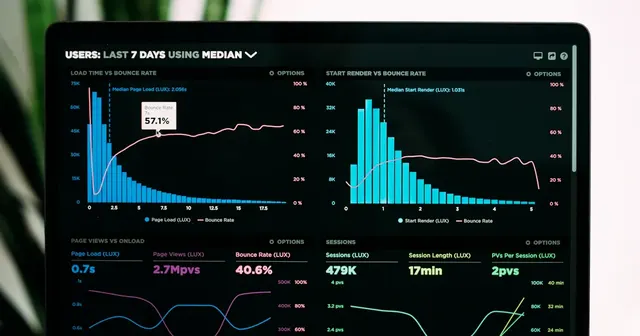
Evaluating AI agent reliability: why it's hard, what to measure, trajectory vs outcome, benchmarks and tools, and the mistakes that give false confidence.
AI · 2026-08-04 · 9 min read
-
Multi-Agent Systems Explained

Multi-agent systems explained: what they are, why split work across agents, the common architectures, how agents coordinate, and when a single agent wins.
AI · 2026-08-04 · 10 min read
-
Tool Use in LLMs Explained

Tool use in LLMs explained: the limits it overcomes, the kinds of tools, the reason-act loop behind agents, how to make it reliable, and common mistakes.
AI · 2026-08-01 · 9 min read
-
Function Calling in LLMs Tutorial

Function calling in LLMs tutorial: how the tool-call loop works, a worked code example, writing good tool definitions, and the pitfalls to avoid.
AI · 2026-08-01 · 9 min read
-
AI Agent Frameworks Compared (2026 Guide)
AI agent frameworks compared: LangGraph, CrewAI, the AutoGen/Microsoft lineage, vendor SDKs, and specialists—plus tradeoffs, MCP/A2A, and how to choose.
AI · 2026-06-26 · 13 min read
-
When to Fine-Tune vs Use RAG: A Decision Guide

When to fine-tune vs use RAG: the knowledge-vs-behavior rule, a side-by-side comparison, when to use each (or both), and the costly mistakes to avoid.
AI · 2026-06-26 · 9 min read
-
Quantization for LLMs Explained (2026 Guide)
Quantization for LLMs explained: how lower precision shrinks models, the formats (GGUF, AWQ, GPTQ, FP8), how to choose, and the pitfalls to avoid.
AI · 2026-06-12 · 8 min read
-
Model Distillation Explained

Model distillation explained: how a small student model learns from a large teacher, soft vs hard labels, real examples, and when to use it.
AI · 2026-06-12 · 8 min read
-
Synthetic Data Generation for Training

Synthetic data generation for training: the methods, tools, and a practical pipeline—plus quality filtering and how to avoid model collapse.
AI · 2026-06-10 · 9 min read
-
Preparing a Fine-Tuning Dataset

Preparing a fine-tuning dataset: the right format, how much data you need, what "quality" means, cleaning and splitting, and the mistakes to avoid.
AI · 2026-06-10 · 8 min read
-
LoRA vs Full Fine-Tuning

LoRA vs full fine-tuning compared: cost, quality, hardware, and flexibility—how close LoRA gets, and a clear framework for choosing between them.
AI · 2026-06-09 · 8 min read
-
How to Fine-Tune Open Source LLMs
How to fine-tune open source LLMs: when to do it, LoRA vs QLoRA, the 2026 toolchain, data prep, a step-by-step workflow, and common mistakes.
AI · 2026-06-08 · 11 min read
-
Evaluating RAG Quality
Evaluating RAG quality with the metrics that matter: retrieval vs generation scores, RAGAS, the RAG Triad, LLM-as-judge, and catching regressions.
AI · 2026-06-02 · 9 min read
-
Reducing Hallucinations with RAG

How reducing hallucinations with RAG actually works: grounding, where it fails, the techniques that lower the rate, and how to measure faithfulness.
AI · 2026-06-02 · 8 min read
-
Reranking Retrieval Results
How reranking retrieval results sharpens RAG: cross-encoders vs bi-encoders, the two-stage pipeline, top reranker models, latency, and tuning.
AI · 2026-06-02 · 9 min read
-
Chunking Strategies for RAG
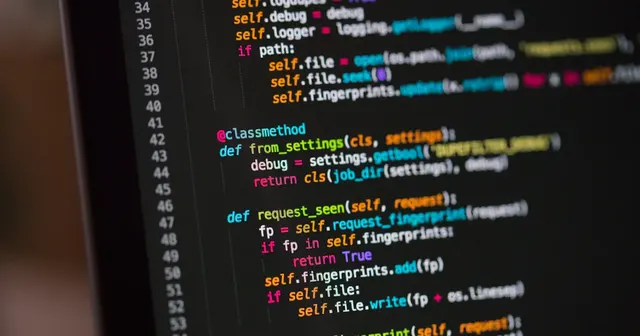
Chunking strategies for RAG compared: fixed, recursive, semantic, and contextual methods, plus chunk size, overlap, and the mistakes to avoid.
AI · 2026-06-02 · 9 min read
-
Embeddings Explained

Embeddings explained for developers: what vector embeddings are, how models learn them, how similarity works, and how to choose a model for RAG.
AI · 2026-06-01 · 10 min read
-
Best Vector Databases for RAG

Compare the best vector databases for RAG—Pinecone, Weaviate, Qdrant, Milvus, Chroma, pgvector, and Turbopuffer—on hosting, hybrid search, and cost.
AI · 2026-06-01 · 11 min read
-
Retrieval Augmented Generation Explained

A developer's guide to retrieval augmented generation: how RAG pipelines work, the components that matter, when to use it, and how to evaluate quality.
AI · 2026-06-01 · 13 min read