10 articles
-
Choosing an LLM for Your Use Case

Choosing an LLM for your use case: define your real requirements, weigh proprietary vs open, test on your own data, and avoid picking by leaderboard.
AI · 2026-10-10 · 9 min read
-
Chain of Thought Prompting Guide

Chain of thought prompting guide: what it is, why it works, zero-shot vs few-shot CoT, self-consistency, when to use it, and the honest caveats.
AI · 2026-08-11 · 9 min read
-
Prompt Engineering Techniques

Prompt engineering techniques that work: being specific, giving context, few-shot examples, structured output, decomposition, and the mistakes to avoid.
AI · 2026-08-11 · 8 min read
-
Evaluating AI Agent Reliability
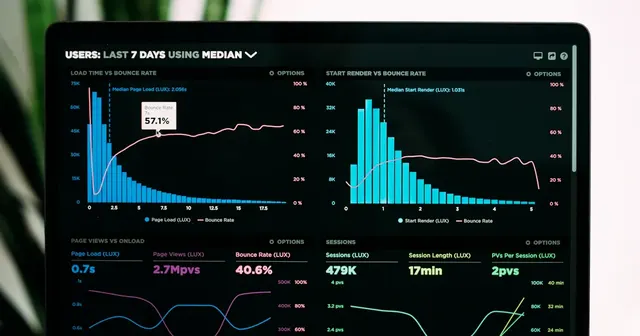
Evaluating AI agent reliability: why it's hard, what to measure, trajectory vs outcome, benchmarks and tools, and the mistakes that give false confidence.
AI · 2026-08-04 · 9 min read
-
Multi-Agent Systems Explained

Multi-agent systems explained: what they are, why split work across agents, the common architectures, how agents coordinate, and when a single agent wins.
AI · 2026-08-04 · 10 min read
-
Tool Use in LLMs Explained

Tool use in LLMs explained: the limits it overcomes, the kinds of tools, the reason-act loop behind agents, how to make it reliable, and common mistakes.
AI · 2026-08-01 · 9 min read
-
Function Calling in LLMs Tutorial

Function calling in LLMs tutorial: how the tool-call loop works, a worked code example, writing good tool definitions, and the pitfalls to avoid.
AI · 2026-08-01 · 9 min read
-
Reducing Hallucinations with RAG

How reducing hallucinations with RAG actually works: grounding, where it fails, the techniques that lower the rate, and how to measure faithfulness.
AI · 2026-06-02 · 8 min read
-
Embeddings Explained
Embeddings explained for developers: what vector embeddings are, how models learn them, how similarity works, and how to choose a model for RAG.
AI · 2026-06-01 · 10 min read
-
Retrieval Augmented Generation Explained

A developer's guide to retrieval augmented generation: how RAG pipelines work, the components that matter, when to use it, and how to evaluate quality.
AI · 2026-06-01 · 13 min read